- The VA Group
- Posts
- The Agentic AI Promise
The Agentic AI Promise
88% of Companies Are Using AI, But Only 6% Are Actually Winning

Shane Riggs
December 23, 2025
BEYOND VIRTUAL
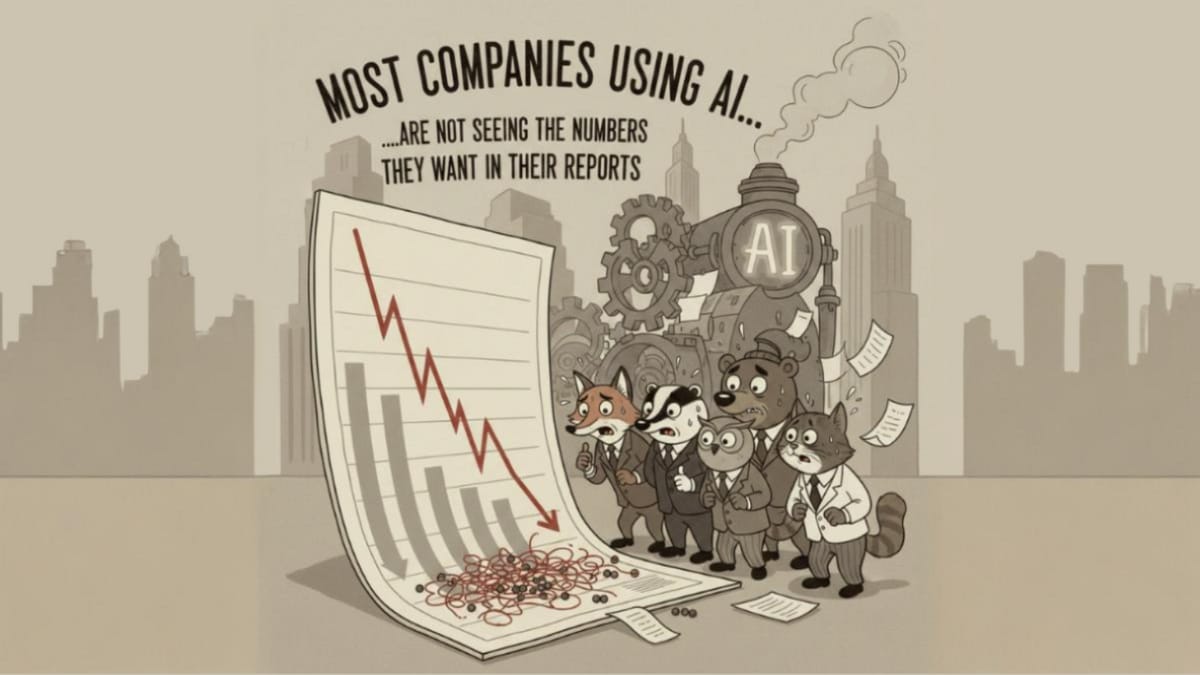
There's something strange happening in the business world right now. Nearly every company you talk to is "doing AI." They've got ChatGPT accounts, they're running pilots, and some have even hired AI teams. But when you ask about results, the room gets quiet.
Recent research shows 88% of organizations are using AI in at least one business function, up from 78% just a year ago. That sounds impressive until you realize something else: only 39% report any meaningful impact on their earnings. And perhaps even more telling, only 6% of companies qualify as "AI high performers."
So what's going on? Everyone's investing, but hardly anyone's winning. Let's unpack this in Beyond Virtual.
Feature Story
Why Most AI Strategy Isn't Working
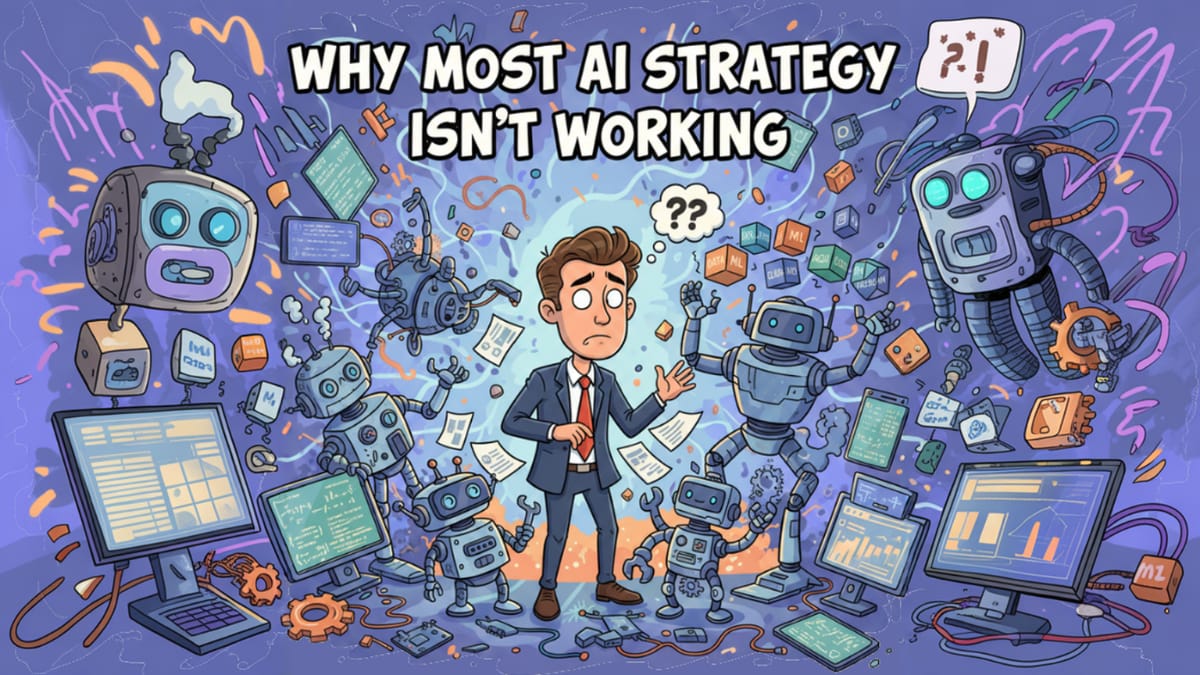
Most executives don't want to admit that they've spent millions on AI. They've deployed copilots, launched chatbots, and run countless pilots. But when the CFO asks about ROI, the answer may not always be clear.
Nearly 8 in 10 companies have deployed generative AI in some form, yet roughly the same percentage report no material impact on earnings.
Think about that for a second.
It's not that AI doesn't work. It's that most companies are using it in ways that don't move the needle.
Here’s Where Companies Are Getting It Wrong
The problem isn't the technology itself, but how businesses are deploying it. Most organizations took the easiest path: they rolled out enterprise-wide tools, let employees use them however they wanted, and hoped magic would happen.
Sadly, it didn't.
These "horizontal" AI deployments scaled quickly. Employees loved them, and productivity felt better. But measuring the actual business impact? Nearly impossible. Meanwhile, the really transformative AI projects - the ones that could actually redesign entire business processes - are stuck. About 90% of these function-specific use cases remain in pilot mode.
Is Agentic AI The Solution Or Another Speculation?
Now there's this massive push toward "agentic AI" - the systems that don't just respond to prompts but can actually plan, make decisions, and take actions on their own. 23% of companies report they're scaling agentic AI systems somewhere in their organization.
But here's where it gets interesting. These agents are fundamentally different from chatbots. Instead of helping you write an email, they could manage your entire vendor payment workflow. And instead of answering customer questions, they could resolve issues end-to-end without human intervention.
The shift is from "assisting" to "operating," and that changes everything.
What the Winners Are Doing Differently
The companies that are actually seeing results from AI - that small 6% that qualify as "high performers" - they're not doing more AI, but they're doing AI entirely differently.
Adding AI on top of existing processes and rethinking the processes is exactly what keeps them one step ahead. Take what one company did with supplier payments. Instead of deploying an AI assistant to help the finance team process invoices faster, they rebuilt the entire accounts payable process around an AI agent that handles everything from invoice receipt to payment approval.
The result? Not a 10% efficiency gain. A complete transformation of how the work gets done.
Visionary Voices
Satya Nadella on What Actually Matters in AI
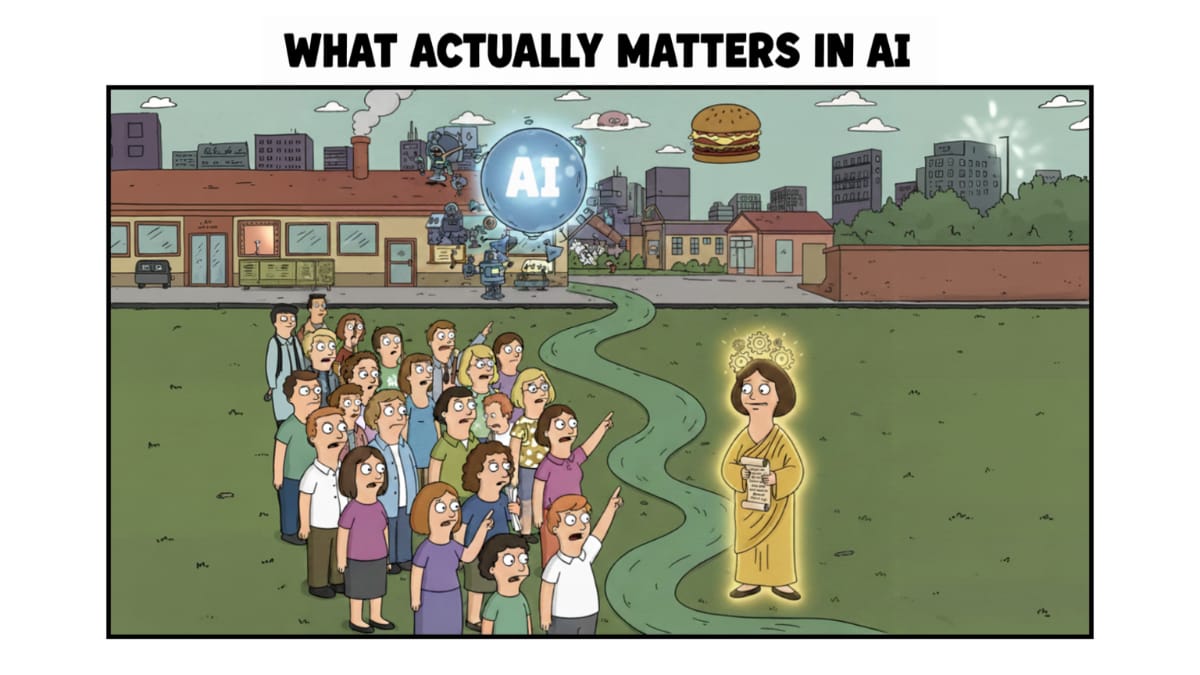
Microsoft’s CEO has been consistently clear about AI. In his view, it isn’t a standalone product category. It’s a new layer that reshapes how all software is built, deployed, and used. Rather than bolting intelligence onto existing tools, Nadella argues that we are witnessing a full rewrite of the modern software stack.
Over the past year, he has focused heavily on the idea of AI as a co-pilot - systems that work alongside humans rather than replace them. But beneath that framing is a more pragmatic observation: models alone don’t create value. Platforms, infrastructure, and integration do. Microsoft’s advantage hasn’t come from having the flashiest demos, but from owning the cloud, the developer ecosystem, and the enterprise workflows where AI actually gets adopted.
In multiple keynotes and earnings calls, Nadella has emphasized that AI only becomes transformative when it’s operational. That means reliable deployment, governance, security, and teams that understand how to embed AI into day-to-day work without breaking existing processes.
The organizations pulling ahead are the ones building internal systems that can support AI at scale. That includes human operators and virtual assistants who review outputs, manage workflows, and ensure that automation aligns with business intent rather than drifting off course.
Nadella has said that AI will fundamentally change how knowledge work is done. That may be inevitable. But decision-making, judgment, and accountability don’t disappear in that shift. If anything, they become more important. Someone still has to decide what “good” looks like, when to trust the system, and when to step in. That responsibility remains human, and it’s becoming more valuable, not less.
The Trend
The December Crunch: Why VAs Are Suddenly Essential

It's December. That means something different depending on your business, but for most entrepreneurs and business owners, it means one thing: chaos.
Holiday spending this year is expected to surpass $1 trillion for the first time. Online sales alone hit record numbers - Black Friday generated $10.8 billion, up over 10% from last year. Cyber Monday? $13.3 billion. Those are staggering numbers, and behind every single transaction is a mountain of work that someone has to handle.
Customer inquiries spike, inventory needs constant monitoring, marketing campaigns need launching, and end-of-year financials need wrapping up. And maybe, just maybe, you'd like to actually enjoy the holidays instead of drowning in administrative tasks.
The Holiday Hiring Problem
Why is it always so challenging to find new hires during the holidays? Traditional seasonal hiring is down from pre-pandemic levels. Some major retailers are actually cutting back. Companies are cautious about bringing on temporary staff when the economic outlook feels uncertain.
But the workload? That's not shrinking. If anything, it's growing.
This is exactly why virtual assistants are seeing massive demand spikes right now. When you can't justify hiring a full-time seasonal employee, but you absolutely need help, a VA becomes the obvious answer. They're flexible, they can start immediately, and you're not locked into long-term commitments.
What VAs Are Actually Handling This Month
The tasks business owners are delegating right now tell you everything about where the pressure points are. Customer service is the big one - handling the flood of inquiries about shipping, returns, and those inevitable "where's my order?" messages. A skilled VA can manage all of that without you having to check your phone every five minutes.
Then there's the administrative avalanche. Year-end financial prep, organizing tax documents, managing inventory tracking, and coordinating with vendors. One business owner I know has their VA handling client and employee gift shopping, while another has theirs managing all the holiday party logistics.
And those who are being smart are already having their VAs plan for January. Getting systems organized, setting up new processes, and clearing the decks so they can hit the ground running in 2026.
The Economics Make Sense
Perhaps the most compelling part is the cost structure. You're not paying for benefits, office space, equipment, or dealing with the headache of bringing on and training someone for just a few weeks. You scale the hours up during December, scale them down in January if you need to.
And in a month where every business is fighting for attention and trying to maximize those year-end sales? Having someone competent handling the operational stuff so you can focus on strategy and growth. Most of us would call that smart business.
FINAL THOUGHTS
While nearly all companies are investing in AI, only 1% of leaders call their companies "mature" on the deployment spectrum. Everyone else is still learning, and maybe that's okay.
And in this era, winning isn't about who spends the most on AI. It’s about who has the discipline to use it where it matters, and the wisdom to ignore it where it doesn't.
They're also the ones combining AI with human expertise strategically. Using agents to handle the repetitive stuff, employing specialized VAs to manage the nuanced work, and keeping humans in the loop for decisions that matter.
It's all about figuring out the right mix for your specific business.
The pressure to "do AI" is intense right now, but rushing into AI without a clear strategy is how companies end up in that 80% that see no material impact.
So maybe the question isn't "How do we deploy more AI?" Maybe it's "Where does AI actually make sense for us?" And then, "How do we make sure we're in that 6% that sees real results?"
Because the gap between those who are winning with AI and those who are just using AI? That gap is widening. And it's not about technology. It's about strategy.
Until next time,
Ready to navigate the AI transformation strategically? Partner with an AI-Expert Virtual Assistant who understands both the technology and your business needs.