- The VA Group
- Posts
- AI is moving your work forward. Are you watching?
AI is moving your work forward. Are you watching?
AI Workflow Revolution: How Agentic AI Quietly Transforms Business Productivity

Shane Riggs
November 25, 2025

BEYOND VIRTUAL
Spend enough time talking to founders lately, and you will notice something interesting. Most will say, almost casually, that they are starting to use more AI. Nothing dramatic. Nothing groundbreaking. Just a quiet acknowledgement that it is now part of their workflow.
But when you look more closely at how their teams are operating, the picture is different. AI is not simply supporting tasks anymore. It is moving work forward in ways many leaders have not fully connected yet.
A sales rep opens the CRM and finds half the follow-up already written, a support ticket arrives already sorted, summarized, and routed, a marketing draft shows up with the structure in place before the team even meets, and erations reports assemble themselves overnight and wait in the morning inbox.
No major rollout. No press release. No moment where someone said, “We now use agentic AI!” It simply appeared inside the same tools people were already using and began taking on parts of the work.
If last week was about understanding that AI can move work forward, this week is about seeing where that is already happening in practical terms and how you can plug in if you are still on the outside.
This edition looks at the specific places where agentic AI is already showing up across different parts of a business. More importantly, it explains where you can begin if you have not yet taken advantage of these capabilities. The goal is to help you see what is already working in the market and how to apply those same ideas inside your own operations.
Feature Story
Agentic AI Inside Actual Departments
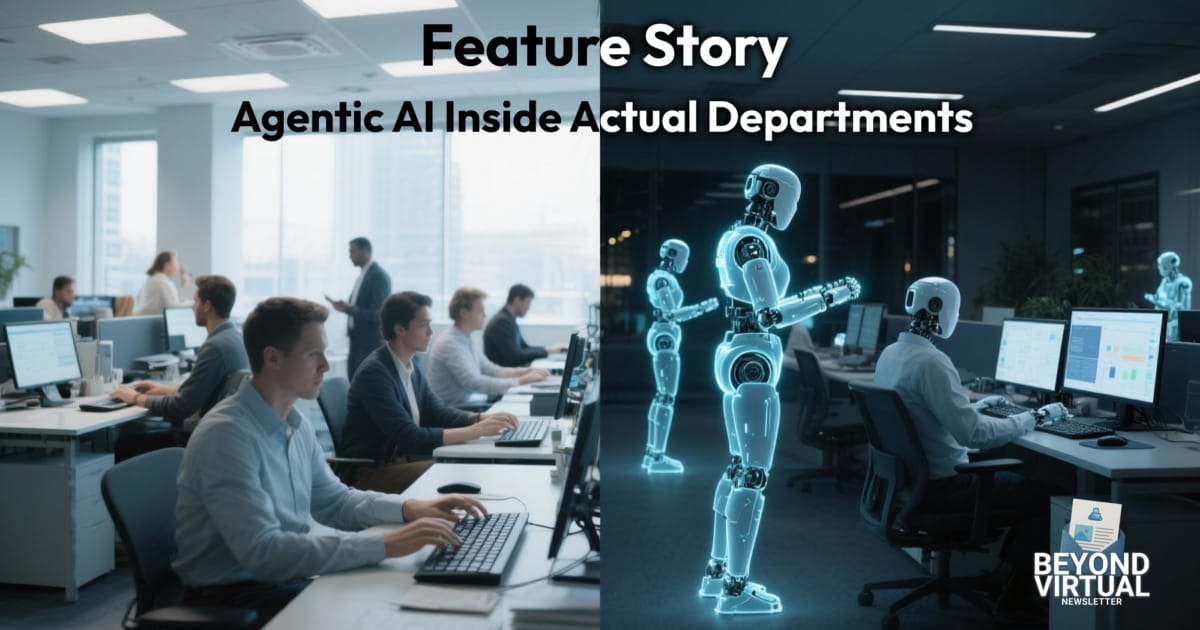
Agentic AI may sound like another technical term, but the idea behind it is very straightforward. These systems take a goal and move through the steps needed to reach it, without waiting for someone to guide every move. You can see this play out clearly inside the different parts of a business.
Sales
Sales teams lose the most time in the gaps between touch points. This is where agentic behavior is making a noticeable difference. Lead scores update on their own, follow-up messages appear as drafts instead of starting from a blank screen, and meeting notes flow straight into the CRM without manual effort. Auto nudges help revive cold prospects. The result is a pipeline that keeps moving instead of dipping every time someone has a busy day.
Marketing
Marketing teams spend a lot of time preparing the work that comes before the real work. Today, much of this groundwork comes pre-assembled. Creative teams begin with structured briefs and starting points, not blank pages. This shortens the cycle from idea to deliverable and leaves more time for human judgment and creativity.
Customer Support
Support teams manage large volumes of repetitive tasks. Sorting, interpreting intent, checking order details, and suggesting possible responses. Agentic systems now handle the first layer before a human ever steps in. Tickets arrive organized and partially resolved. Agents focus on the remaining steps that require human understanding rather than repetitive triage. Customers benefit from faster responses.
Operations
Operations teams often carry the invisible load inside a business. They do the tasks that keep everything running. Agentic AI now handles more of this background work. Reports generate themselves overnight, alerts show up early instead of late, SOP improvements surface based on real usage. It creates fewer bottlenecks and fewer surprises.
Leadership
Leaders are not excluded from this shift. Instead of digging through notes and updates, they begin their day with meeting briefs, sentiment patterns, and early signals that point to what needs attention. The work of decision-making stays with them, while the preparation that used to surround it becomes lighter and more predictable.
The real value of agentic AI is not found in big, complicated systems. It is found in the small improvements that happen inside everyday tasks. When small tasks move with less friction, entire workflows begin to feel lighter. Businesses that understand this are already operating with a different kind of momentum, and it shows in their output and responsiveness.
Visionary Voices
Google CEO’s Strategy: “New Kind of Assistant"
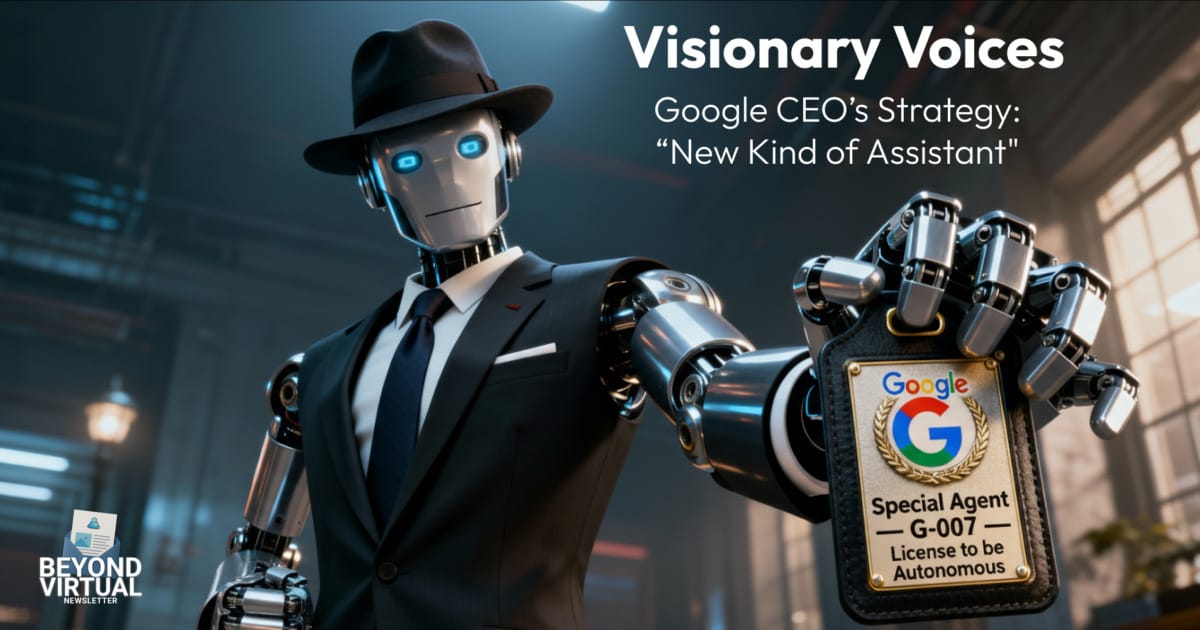
If you want to understand where agentic AI is heading, it helps to look at the companies shaping the direction. Google is one of them. Their recent focus has been on building AI that can understand goals, plan several steps, and carry out work with human supervision. In other words, agents.
In recent announcements, Google has framed its work around what it calls “agents”, systems that understand goals and carry out multi-step workflows. The Gemini model family is the backbone for many of these developments. Google and Alphabet CEO, Sundar Pichai, says they are “investing in developing more agentic models, ones that understand more about the world around you, think multiple steps ahead and take action on your behalf with your supervision.”
This is more than talk. In one of its enterprise announcements, Google introduced “Gemini for Government,” a service built around agentic capabilities, designed to streamline workflows, generate reports, and handle repetitive work on behalf of users in a secure environment.
For business owners, this matters. When companies the size of Google begin building around agents, it tells us that the question is no longer whether agentic AI is coming. It is already here. The better question becomes where inside your business this type of system should be allowed to start the work instead of waiting for someone to initiate it.
A simple way to begin is to look for the gaps. The moments where progress stops because someone has not yet taken the first step. The tasks that consistently sit in a queue because they require a small action before anything else can happen. These areas are often the best starting points for agentic AI, because the goal is clear and the path is predictable. The system can handle the early layers and hand over the parts that require human judgment.
With Google making a public commitment to this direction, it is clear that agentic AI is moving from experiment to tangible infrastructure. And that brings us to the broader trend that is shaping how modern teams are beginning to work.
The Trend
Where Agentic AI Is Heading and How Businesses Can Start Using It Today
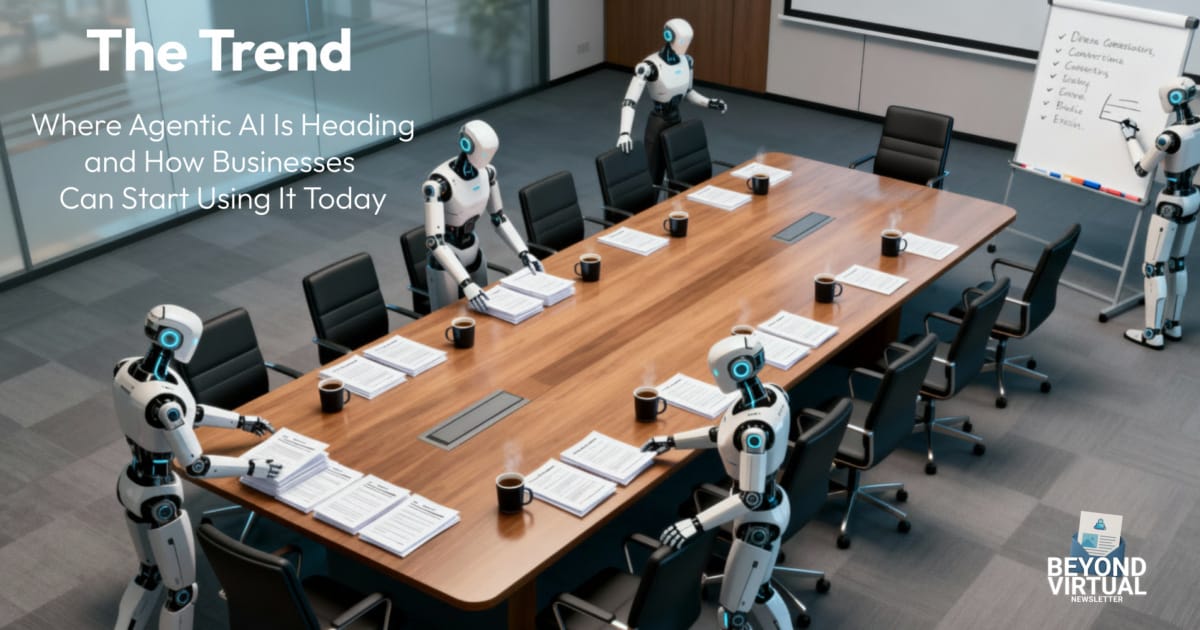
Every business has areas where work moves smoothly and areas where it slows without warning. These slowdowns rarely feel dramatic on their own, but over time, they create lost hours and missed opportunities. Agentic AI is now being used to close these gaps.
What makes this shift meaningful is that it does not require a major transformation. It begins with tools that are already part of the daily workflow. When a system prepares the first steps of a task or keeps a sequence moving until a person needs to intervene, the overall pace of the business begins to change. Work stops waiting for permission and starts moving with a steadier rhythm.
You can already see this happening across a variety of real use cases.
Pre-Drafted Workflow Preparation
Teams are beginning their day with the groundwork already done. Morning reports arrive ready for review, meeting briefs show up prepared ahead of time, and research results come back organized. Tools such as Notion AI, ClickUp AI, and Perplexity are making the early prep stage more reliable and less time-consuming.
Customer Follow-Up That Does Not Get Lost
Sales teams depend heavily on consistent motion, yet follow-ups are one of the most common points of delay. Agentic systems now keep the process moving. Draft responses appear without being requested. Behavioral triggers surface leads that are going cold. Customers receive timely nudges without adding work to the sales team. Platforms like HubSpot and Apollo already offer these capabilities.
Internal Triage and Routing
A significant amount of time is lost simply sorting and organizing incoming information. AI now scans, categorizes, and routes messages before a person sees them. Urgent items appear early, and unrelated items stay out of the way. Tools such as Superhuman AI and Front are helping teams reduce the time spent on inbox maintenance.
Light Operations Management
Operations work is often slow because it relies on consistency. Reports, compliance checks, and process updates all demand steady upkeep. Agentic systems now produce these pieces automatically. They prepare compliance summaries, surface suggested adjustments to existing processes, and flag exceptions before they grow into problems. Platforms like Process Street AI and Asana Intelligence are already supporting this shift.
Creative Preparation Before Humans Begin
Creative teams often lose hours before the real work begins. They gather references, build early drafts, and assemble the first structure. AI now handles a portion of that setup. Visual mockups appear automatically. Content variations are generated quickly. Early interpretations of briefs help teams begin with direction instead of a blank screen. Adobe Firefly and Canva AI are among the tools helping accelerate this stage.
Across all of these examples, we see that Agentic AI works best when the intended outcome is simple and the steps between are predictable. This is why the most effective starting point is not a complex AI strategy but a straightforward question: where does work slow down for no meaningful reason?
Once you identify those friction points, it becomes easier to place AI in the right parts of the workflow. The aim is not automation for its own sake. The aim is smoother movement, fewer delays, and a work environment that allows people to focus on the decisions and creative thinking that move the business forward.
A Final Note
You do not need to overhaul your business to take advantage of this technology. You only need to identify one area where work consistently slows and let AI carry the first layer. Once that shift takes hold, it becomes much easier to expand into the rest of the operation with clarity.
The companies that learn to work with this new rhythm will move faster, stay more consistent, and spend more energy on the parts of the business that actually create value.
Until next time,
Agentic AI closes gaps, but a dedicated Virtual Assistant ensures the rhythm never breaks.
Let us handle the deployment and daily management of your new, AI-powered workflows. Get instant, consistent momentum without the IT headache.
Eliminate 5 Hours of Friction This Week
Tell us your biggest bottleneck, and we'll show you the exact AI-VA solution that fixes it.